The VOICE of UPMC Shadyside 2025

Expressing Gratitude

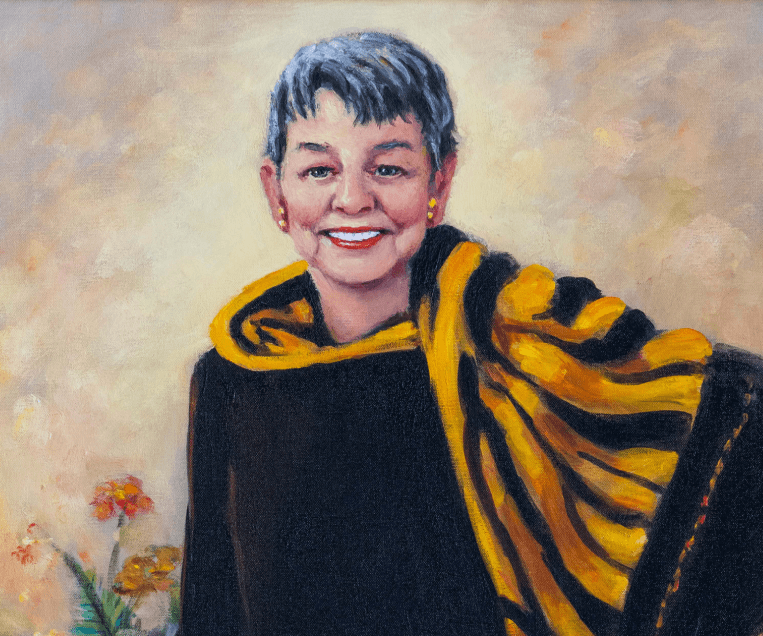
This caring woman

Irene Ciemnolonski Shea was born in Duquesne, Pennsylvania, in 1912. The daughter of a steelworker, she grew up in a family where money was scarce and health care unaffordable. While working as a manager at arestaurant in downtown Pittsburgh next to Horne’s Department Store, she met C. Bernard Shea, one of the store’s owners. They fell in love, married, and divided their time between Pittsburgh and the Berkshires in Massachusetts. Understanding the difference that access to high-quality health care can make to a community’s well-being, they became active supporters of their local hospital.

After Mr. Shea died, Mrs. Shea put her energy, intelligence, and resources into Shadyside Hospital, where he had been a trustee, as had his father. She soon saw that physicians in the hospital’s Internal Medicine residency program were making do with only a couple of exam rooms to teach and care for outpatients. That changed in 1985 with a generous gift from this caring woman, who became a vice chair of Shadyside Hospital Foundation in 1991.

How giving grows Irene Shea’s 1985 gift has grown into the 16-room, outpatient Shea Medical Center, staffed by faculty and resident physicians of the General Internal Medicine Training Program, along with nurses and educators. Adults of all ages receive comprehensive outpatient primary care regardless of ability to pay. Mrs. Shea left a large endowment to the Foundation when she died in 2012. Her gifts continue to support internal medicine care and teaching. 

To Honor an Exceptional Standard of Patient Care

Murray Sachs is a legend at Shadyside Hospital,” says Jennifer Gonzales McComb, MD, MPH, section
 chief of Pulmonary and Critical Care Medicine and the medical director of Critical Care Services at
 UPMC Shadyside. “The folks who worked with him remember being intimidated by his presence, but they also remember his wonderful bedside manner and his deep care and concern for his patients.”

Born in Lithuania in 1931, Dr. Sachs grew up in Braddock and was a freshman at Penn’s Wharton School when he was diagnosed with tuberculosis. He spent nearly a year in a Pittsburgh sanatorium, where he discovered that caring for lung patients was his calling — and then he transformed pulmonary care.

One of the country’s pioneer anti-smoking activists, Dr. Sachs was the founding chief of Shadyside’s Division of Pulmonology and created Pittsburgh’s first dedicated pulmonary unit at the hospital. Every resident in medicine rotated through his unit as Dr. Sachs reminded them to listen to their patients, not just to patient’s lungs. “At UPMC Shadyside, science and medicine must continue to go hand in hand with a real concern for individuals,” Dr. Sachs said in 2010.

This beloved physician served as a charter director of Shadyside Hospital Foundation. When he retired in 2011, Drs. Fred Rubin, Joel H. Weinberg, and other colleagues and friends established the Murray Sachs, MD, Lectureship in Pulmonary Medicine at the Foundation to honor his achievements and perpetuate his exceptional standard of care. Dr. Sachs died in 2020.

“He was not just a pulmonologist but a true internist and master diagnostician,” adds Dr. McComb, a Foundation director. “It is fitting that the Shadyside Hospital staff and community have the opportunity to hear a lecture from some of the best pulmonary physicians and researchers in our region every year in memory of Dr. Sachs.”

“At UPMC Shadyside, science and medicine must continue to
 go hand in hand with a real concern for individuals.”
- Murray Sachs, MD

A Whole-Person Approach to Health

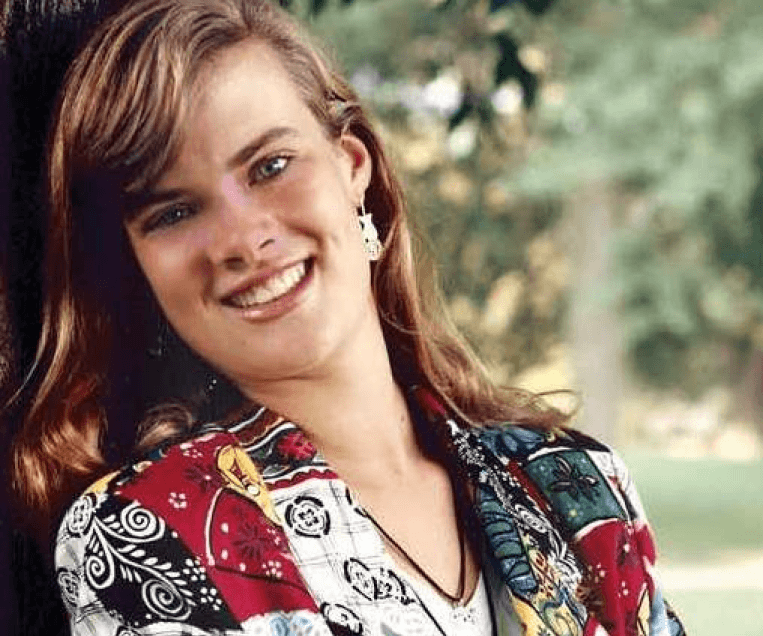
In 1997, when Susie and Roy Dorrance’s 22-year-old daughter Emily developed a sudden, rare, and lethal cancer, a close family friend, Dotty Beckwith, suggested the family seek the support of David Servan-Schreiber, MD, PhD. David was a revolutionary cognitive neuroscientist, psychiatrist, best-selling author — and co-founder of the Center for Integrative Medicine (CIM) at UPMC Shadyside. CIM was the first hospital-based center in Pittsburgh to integrate conventional medicine with scientifically grounded natural healing practices.

“Emily was wonderfully helped by the Center for Integrative Medicine,” says her mother. “This was all before Hillman Cancer Center and the progress in cancer care since then. Everything that could be done by conventional medicine at that time was done for Emmy. And CIM became a point of rescue for her. The staff helped her in so many ways: mind–body work, acupuncture, shiatsu massage, Reiki, nutrition counseling around an anti-inflammatory diet, cranial sacral therapy…they took time to talk with Emmy. They listened to her. They embraced our family fully. What they did was transformative.”

Susie remembers Emily saying, “I just love it at the center. They always help me.”

“Emily was wonderfully helped by the center for Integrative Medicine. The Staff took time to talk with her. They listened to her. They embraced our family fully. What they did was transformative.”
- Susie Dorrance

The Dorrances expressed their gratitude by giving generously to CIM through Shadyside Hospital Foundation. They have continued to do so over the years, along with their friend Dotty Beckwith.

When David Servan-Schreiber left Pittsburgh to return to France, he enthusiastically supported the selection of psychiatrist Ronald Glick, MD, to succeed him. Serving as CIM’s medical director since 2002, Dr. Glick notes that integrative medicine is meant to work in conjunction with traditional medicine, providing a holistic approach to healing — mind, body, and spirit.

Therapies CIM provides today range from acupuncture and naturopathic approaches to psychological counseling focusing on mind–body work such as biofeedback and relaxation therapies, chiropractic, and massage, and naturopathic medicine with a focus on nutrition and supplements. Staff members work with each patient to determine which services are most appropriate.

Medical consultation around pain, physical health, and stress-related conditions can help connect patients with the most appropriate services, says Dr. Glick, whose practice is focused on the use of integrative health approaches for the management of chronic pain and mental health conditions that have not responded fully to traditional therapies.

Examples of Shadyside Hospital Foundation’s many grants to CIM have included research into dietary supplement usage by immunotherapy patients, studying the use of acupuncture to lessen pain, and developing a class aimed at preventing heart disease.

Remembering John Maitland Hopwood

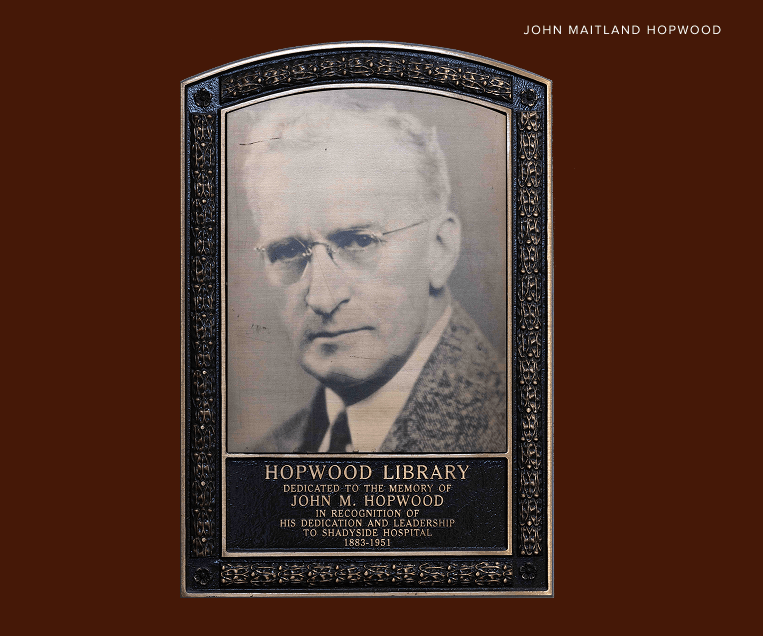
The Welsh-born John Maitland Hopwood (1883–1951) was a hard-hitting, practical businessman with snapping blue eyes, crisply curling hair, an inventive mind — and a poetic way of speaking that led one friend to describe him as a “medical missionary.”

A founder of the Calgon Corporation, created to market a new way to soften water by “locking up” its calcium content, John Hopwood often said that his chief hobby was his volunteer fund-raising work at Shadyside Hospital. “To him, the hospital was not just a group of inanimate buildings,” said a fellow trustee. “It was a warm, pulsating center which he loved because it was the means of giving health and comfort to thousands.”
“We are here as the inheritors of a glorious reality and we are charged with the grave responsibility of handing it on to the future.”
- John Maitland Hopwood

Hopwood led the 1939 campaign to build a free dispensary, ancestor of the Family Health Center, and nursing school building, today the North Wing. Urging on his campaign volunteers, he said, “We are here as the inheritors of a glorious reality … and we are charged with the grave responsibility of handing it on to the future.”

He inspired contributions from people throughout Pittsburgh. One man apologized for being able to give only one dollar. “Our little baby was born in Shadyside Hospital, and if it hadn’t been for the wonderful care she got, she would have died,” the donor said. John Hopwood’s family has carried on his generosity to Shadyside by supporting projects throughout the hospital, including the John M. Hopwood Library and advances that make the facilities more energy efficient.